

24/7 AOG Critical Response
Hotline UK +44 1403 798888US +1 877 780 2008
Our award winning global AOG service is manned 24 hours a day, 365 days a year.
Please call +44 1403 798888 or email aog@ajw-group.com.
CLOSE
24/7 AOG Critical Response
HotlineUK +44 1403 798888US +1 877 780 2008
Our award winning global AOG service is manned 24 hours a day, 365 days a year.
Please call +44 1403 798888 or email aog@ajw-group.com.

PBH CUSTOMER PORTAL
A secure online portal for existing AJW PBH customers. Manage exchange orders, track shipments, monitor repairs, access documentation, and communicate with support in real time.




26 Aug 2026
Aircraft that were expected to be nearing retirement are remaining in service for longer than planned as airlines continue to navigate new aircraft delivery delays, supply chain constraints and increasing operational demands. For MRO providers and operators alike, this shift is creating new challenges around component availability, repair strategies and inventory management. So, how can the industry continue to support ageing aircraft reliably and cost-effectively in an increasingly constrained market?
In a recent AviTrader MRO 360 feature, journalist David Dundas explores the growing complexity of supporting ageing aircraft fleets. The article highlights how extended fleet life cycles are reshaping maintenance strategies, forcing operators to make increasingly difficult decisions around repairing, replacing, overhauling, or exchanging components. With aircraft parts often expensive and, in some cases, difficult to source, the focus is shifting from reactive maintenance to long-term planning and smarter asset management.
Among the key themes identified is the impact of delayed next-generation aircraft deliveries, which has increased demand for legacy fleet support and placed additional pressure on parts availability. As fewer aircraft are being retired and dismantled, the supply of used serviceable material (USM) has tightened, particularly for critical components and those linked to constrained engine programmes.
Contributing to the discussion, AJW's Simon Merriott, SVP Customer Service, explains that operators are increasingly turning to outsourced component support solutions to preserve financial liquidity while maintaining fleet reliability. Rather than investing heavily in inventory, airlines are looking for predictable, flexible support models that provide access to components when needed. Simon highlights Power-By-the-Hour (PBH) programmes as an effective way to balance cost control with operational resilience, providing operators with guaranteed component support without the burden of extensive spare parts holdings.
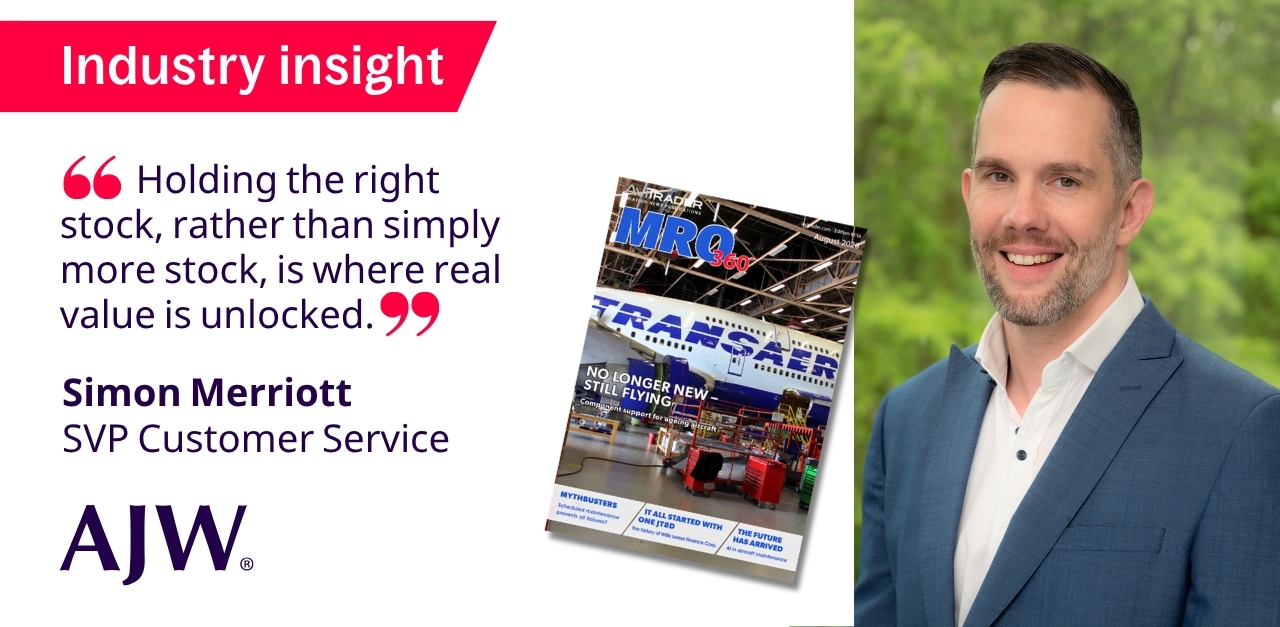
Simon also points to advanced inventory management and the strategic use of USM as major opportunities for cost savings. "Holding the right inventory, rather than simply more inventory, is becoming increasingly important as operators work to reduce capital tied up in slow-moving stock," he explains. Combined with data-driven forecasting tools, these approaches can help airlines improve availability, reduce aircraft-on-ground (AOG) risk and manage maintenance costs more effectively.
Looking ahead, the article concludes that the future of ageing aircraft support will depend on greater collaboration, smarter forecasting, and a more strategic approach to component management. As fleets continue to operate beyond their original service expectations, the industry is moving away from traditional transactional models and towards integrated support solutions that prioritise resilience, efficiency, and long-term value. For operators navigating today's challenges, effective component support is no longer just about keeping aircraft flying; it's about ensuring they remain economically viable for years to come.




 RSS news
©2026 A J Walter Aviation Limited



 Email to my diary