
24/7 AOG Critical Response
Hotline UK +44 1403 798888US +1 877 780 2008
Our award winning global AOG service is manned 24 hours a day, 365 days a year.
Please call +44 1403 798888 or email aog@ajw-group.com.
CLOSE
24/7 AOG Critical Response
HotlineUK +44 1403 798888US +1 877 780 2008
Our award winning global AOG service is manned 24 hours a day, 365 days a year.
Please call +44 1403 798888 or email aog@ajw-group.com.

PBH CUSTOMER PORTAL
A secure online portal for existing AJW PBH customers. Manage exchange orders, track shipments, monitor repairs, access documentation, and communicate with support in real time.




24 Mar 2026

Critical parts shortage - a phrase thrown about a great deal in recent years. Without revisiting the reasons behind this shortage, which are now all too familiar to the aviation industry, we know that suppliers and MROs must adapt inventory strategies to mitigate the struggling supply chain, while meeting their customers' needs.
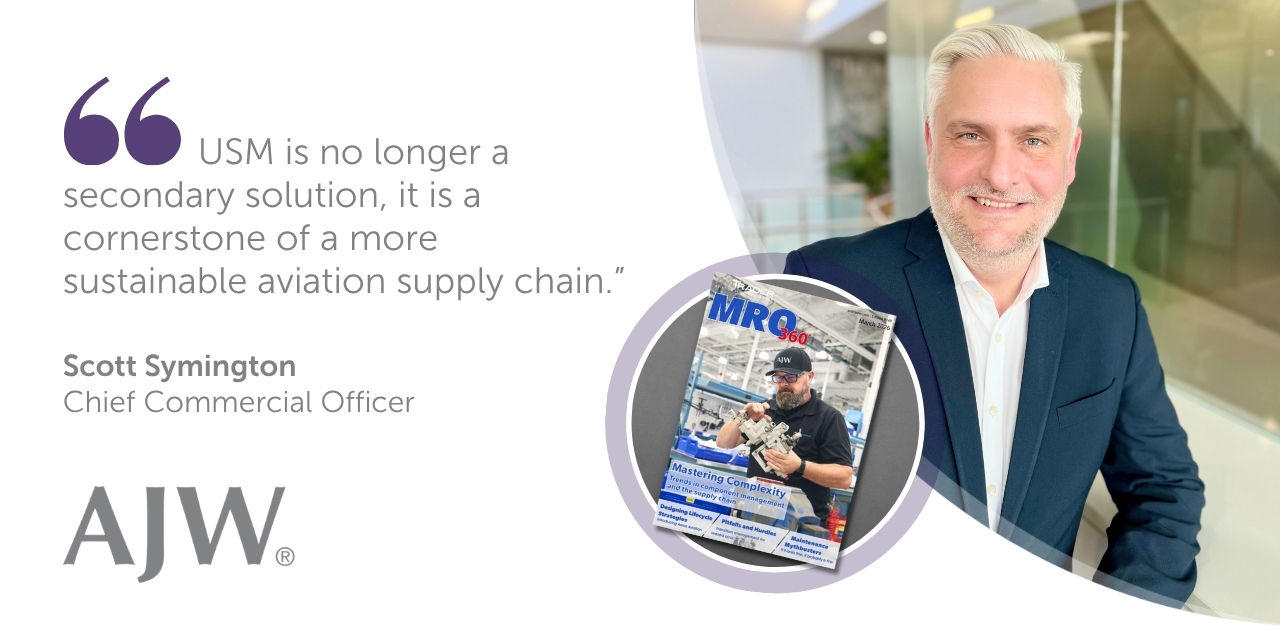
In the latest issue of AviTrader MRO360, journalist David Dundas speaks to Chief Commercial Officer Scott Symington about trends in component management and supply chain.
What are the most significant disruptions still affecting component availability today?
Scott states that disruptions and supply chain volatility have become the industry’s new normal, requiring organisations to build agility and resilience directly into their operating models. Operational, combined with the rapid pace of technological advancement in aerospace, is increasing the complexity of components and the demand for specialised expertise. He adds: “Organisations that invest in their people and digital capabilities will be best positioned to adapt to disruptions to maintain operational continuity.”
The consensus amongst those interviewed is that the critical challenges remain: a workforce skills shortage, long OEM lead times, turnaround times, and raw material availability.
Are operators shifting toward higher inventory levels, or are they trying to stay lean despite shortages?
“Instead of building large inventories, some operators are turning to integrated support solutions that enable them to remain lean while protecting operational reliability,” says Scott. Providing operators with predictable cost structures and guaranteed access to component support via programmes such as AJW's PBH support acts as both a financial hedge and a resilience strategy, allowing operators to maintain a more stable bottom line while securing reliable access to inventory. This becomes even more relevant as the global fleet undergoes a significant technological transition.
What are the benefits and risks of relying on shared inventory versus owning strategic stock?
The AJW Group CEO suggests that it is fundamentally about balancing risk, capital, and control. He explains, saying, “Shared inventory models allow operators to transfer maintenance risk to a specialist partner such as AJW.” The Group’s PBH support provides cost visibility and budget stability. At the same time, its in-house optimisation platform, Apollo, uses probabilistic modelling to align stock levels with utilisation and risk tolerance, delivering resilience without unnecessary capital burden.
What role does USM play in solving today’s component shortages?
With extended lead times on new parts and ongoing production bottlenecks, USM enables operators to access certified components more quickly, reducing AOG risk and supporting fleet continuity, explains Symington. It also offers significant cost advantages, helping airlines manage maintenance budgets. Furthermore, sustainability is also becoming a key driver as regulators, investors, and the public demand greener operations from the industry, he says. “The balance between new and used material will continue to evolve, but USM is no longer a secondary solution; it is a cornerstone of a more sustainable aviation supply chain.”
Are airlines and lessors becoming more open to USM compared with the past?
Scott sums the question up perfectly, saying, “Operators and asset owners increasingly view USM not as a possible option, but as a credible, certified solution that supports fleet continuity, cost control, and sustainability objectives.”
What advice would you give to smaller MROs or operators trying to navigate component shortages and rising costs?
Scott Symington advises that disciplined inventory management is critical and that success will depend on striking the right balance between service performance and profitability. Capital tied up in slow-moving inventory can quickly erode margins, while insufficient coverage risks operational disruption and reputational damage. Agility is equally important. His parting advice is for businesses to strengthen their forecasting capabilities, build flexible supplier relationships, and ensure they can position material where and when it is needed.
“Those that combine data-driven inventory decisions with operational responsiveness will be better placed to navigate shortages and rising costs.”




 RSS news
©2026 A J Walter Aviation Limited


 Email to my diary