

24/7 AOG Critical Response
Hotline UK +44 1403 798888US +1 877 780 2008
Our award winning global AOG service is manned 24 hours a day, 365 days a year.
Please call +44 1403 798888 or email aog@ajw-group.com.
CLOSE
24/7 AOG Critical Response
HotlineUK +44 1403 798888US +1 877 780 2008
Our award winning global AOG service is manned 24 hours a day, 365 days a year.
Please call +44 1403 798888 or email aog@ajw-group.com.

PBH CUSTOMER PORTAL
A secure online portal for existing AJW PBH customers. Manage exchange orders, track shipments, monitor repairs, access documentation, and communicate with support in real time.




19 Jun 2026

The global aviation sector continues to navigate shifting asset values, evolving fleet strategies, and the increasing importance of used serviceable material (USM) in balancing cost and availability. As airlines and lessors reassess how to extract maximum value from aircraft assets, decisions around whether to part out, store, or remarket have become more complex, requiring a blend of technical expertise, market insight, and precise execution.
What makes today’s environment even more striking is how far the industry has come. Just two decades ago, only around half of a commercial aircraft would typically be recovered at end of life, with the remainder often destined for storage or landfill. Today, that figure can exceed 90% by weight, reflecting a fundamental shift in how aircraft are managed, dismantled, and repurposed. This transformation, driven by advances in recycling practices, aftermarket demand, and specialist capabilities like those offered by AJW Group, has redefined end-of-life strategies and created new opportunities to unlock value from retired assets.
In this context, AviTrader MRO 360 features AJW Group’s Director of Asset Management, Lindsay Cooper, who shares expert insight into the commercial and operational realities of modern teardown and asset recovery strategies. As Lindsay explains, “Maximising return from an aircraft isn’t about a single decision point, it’s about understanding the full lifecycle value and acting with the right data at the right time.”
The article explores the key factors influencing end-of-life decisions, from aircraft age and maintenance history to market demand and regulatory considerations. Cooper emphasises the importance of asset quality, noting that “well-maintained aircraft with strong records consistently deliver higher-value components, particularly in a market where traceability is everything.”
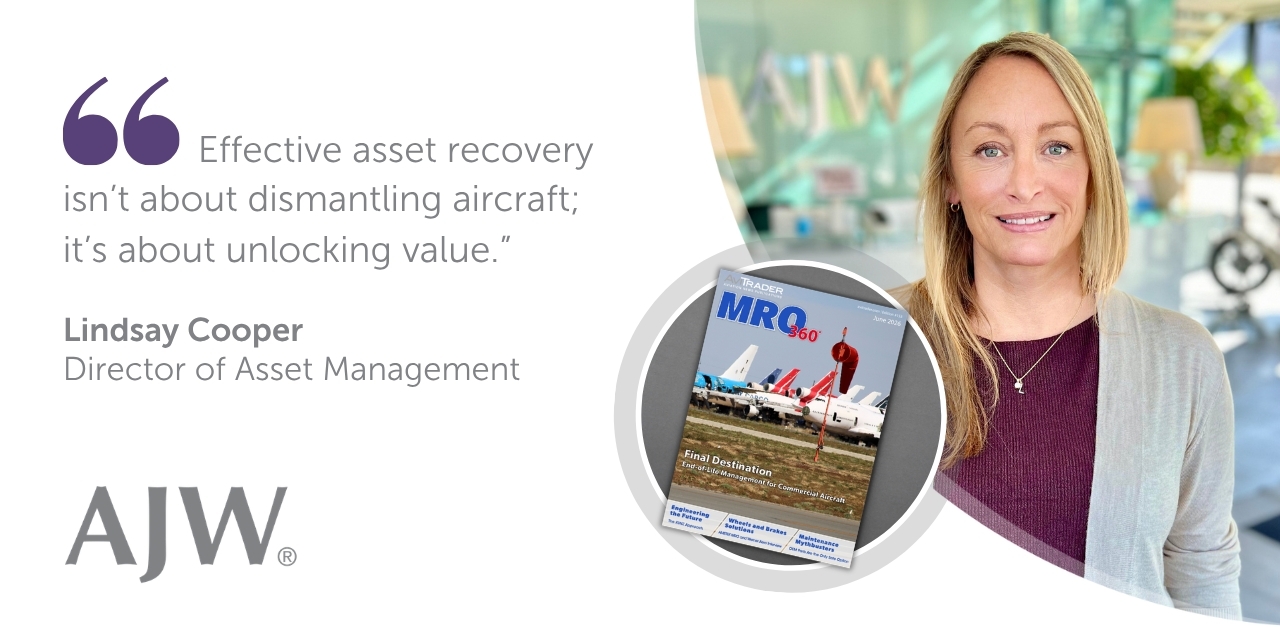
A core theme throughout is the need for a disciplined, data-driven approach to USM recovery. From rigorous asset appraisal and detailed records auditing to structured disassembly processes, maintaining full component traceability is critical to achieving stronger aftermarket returns. As Lindsay puts it, “it’s not just about what a part is, it’s about proving what it’s been through.”
The feature also highlights the components that drive recovery economics, particularly engines, landing gear, and APUs, and how their value shapes overall strategy. “Engines often represent the majority of recoverable value, but they also carry the greatest risk,” AJW’s Head of Asset Management explains, underlining the importance of technical insight and timing in maximising returns.
Finally, the article examines how the Group’s in-house MRO capabilities at AJW Technique in Montreal influence repair-versus-scrap decisions, extending the life of components that might otherwise be written off.



 RSS news
©2026 A J Walter Aviation Limited


 Email to my diary